Weil Technology has introduced an innovative system to produce thin-walled stainless steel containers capable of offering chemical and mechanical resistance, hygiene, sustainability, and adaptable geometries, positioning itself as a high-performance alternative to traditional aluminum or tinplate cans.
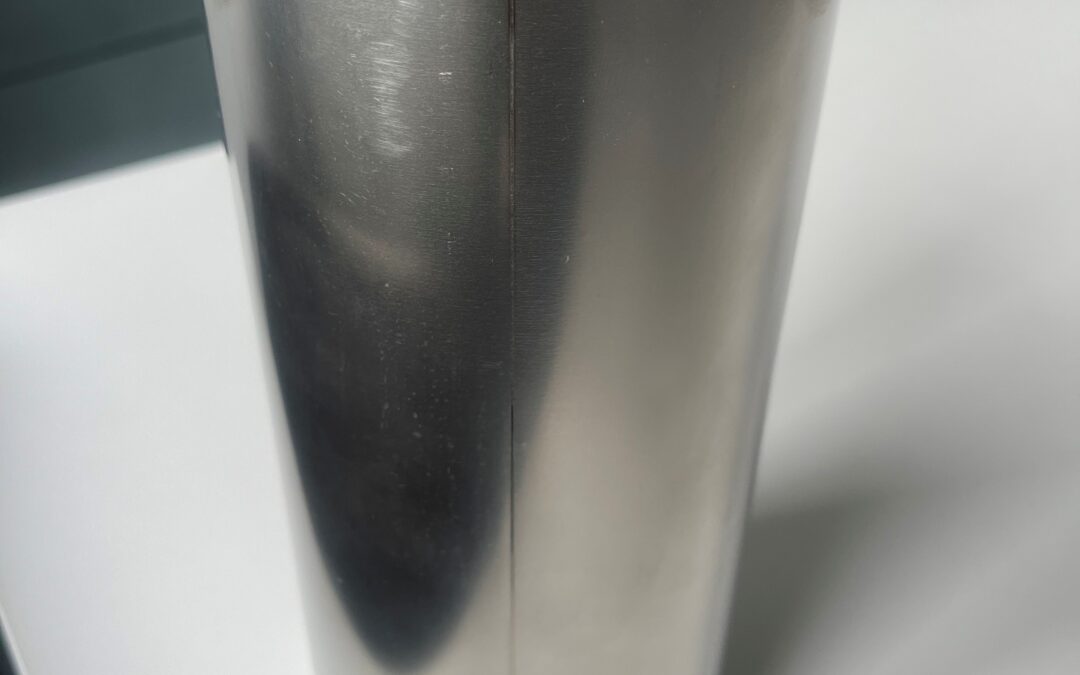
The new system allows the manufacture of containers with walls of just 0.3 to 0.5 mm, with virtually invisible welds and perfectly smooth surfaces. The company states that this is achieved by combining welding technologies that come from the battery manufacturing with the precision of laser in the longitudinal seam.
“The laser provides the speed, while precision is ensured by our sophisticated clamping system and the continuous manufacturing flow,” explain the engineers at Weil Technology.
The innovation comes at a key moment: the entry into force of the European Packaging Regulation (PPWR) in 2026 establishes stricter recyclability and uniformity standards across Europe. “The increase in requirements for packaging chemical, reagent, or high-quality products requires alternatives to traditional cans, which often carry internal coatings with PFAS or other regulated substances,” Weil Technology notes. “Our laser-welded stainless-steel containers offer high performance, are sustainable, and ready for the future.”
Another strong point of the technology is the chemical and mechanical resistance of the containers. “Stainless steel is naturally PFAS-free, tasteless, and neutral from a sensory point of view. It does not react with acidic, alcoholic, or hightemperature fillings,” they explain. Laser welding guarantees stable seams, airtight and liquid tight, ideal for hygienically demanding applications.
Versatility is another advantage: containers can be produced in oval, square, or cylindrical shapes, with cycles of just one second. “After cutting the sheet, it is rolled and the longitudinal seam is welded every few seconds. Once the shell is formed, it can be shaped into oval or rectangle and the lid and base fixed by circumferential laser welding,” the company details. Julius Kleemann GmbH for example produces lid and base and seams them onto the shell to produce 2 l stainless steel cans. This process combines speed, flexibility, and precision, without the need for interchangeable parts, adapting to all types of metal containers.
Food safety is also reinforced. “Laser welding without filler material creates smooth and high aesthetic seams. They are stable, airtight, and corrosion resistant, ideal for demanding fillings,” they emphasize.
Finally, sustainability and recycling are pillars of the development. The containers are reusable, refillable, and durable, with a prolonged service life. Additionally, stainless steel is 100% recyclable within the same cycle, exceeding 90% recovery. “Unlike plastic, it is not subject to recycled content requirements, which reduces costs, maintains quality, and simplifies production,” they conclude.
With this system, Weil Technology combines technological innovation, industrial efficiency, and commitment to sustainability, offering food, beverage, and chemical manufacturers a safe, eco-friendly, high-performance packaging alternative, ready to face future challenges.
 LPC Systems CleanTech laser solutions for efficient aluminum can labeling preparation
 what is tfs packaging
 New report by Ball Aerosol Packaging on innovative Eyeris® printing technology for sustainable aluminum packaging
 Food Can Welding: Process and Technology
 what is WIMA WELDING?
Electric welding in metal can manufacture
what is WIMA WELDING?
Electric welding in metal can manufacture
 FINNISH STAINLESS STEEL GROUP OUTOKUMPU DISPOSES OF ITALIAN PLATE SERVICE
 HIGH VACUUM PACKAGING OF CANS AND JARS: CTCPA OFFERS TRIALS OF THIS NEW TECHNOLOGY
 Germany’s thyssenkrupp steel opts for climate neutral steel