

Offering clear incentives to return empty cans is key to the success of DRS, according to the CEO of MPE. The major challenge remains ensuring that collection and sorting systems capture as much metal as possible. Limitations in the supply of steel and aluminum could slow investment in circular recycling and increase costs. Even so, Spain raised its can recycling rate to 70% in 2023, placing it among the European leaders.
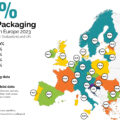
According to the latest data, 580,000 tonnes of aluminum beverage cans were recycled in Europe, a record figure, although the recycling rate fell to 74.6%. How do you explain the drop in the recycling rate despite the absolute increase in the volume recycled?
Indeed, in Europe, the total amount of aluminum recycled from cans reached a significant milestone, reflecting a higher overall consumption of aluminum beverage cans in 2022. This meant that more cans entered the recycling chain. However, the stable level of collection and sorting caused the recycling percentage to decrease slightly due to the greater increase in the production and total consumption of cans.
Looking ahead, the prospects are positive. Together with European Aluminium, MPE is advancing a joint roadmap towards full circularity (100%) of aluminum beverage cans in 2050. MPE will continue to support high-performance collection systems, such as DRS, encourage greater investment in sorting and recycling capacity, and anticipate an increase in the volumes of recycled material destined for high-quality applications, such as new cans.
How will MPE promote DRS in those European countries that have not yet adopted them?
MPE supports the mandatory implementation of DRS because well-designed systems achieve the highest collection rates for aluminum beverage cans and provide high-quality material for closed-loop recycling. Our communication highlights that effective DRS are easy for consumers to use, widely accessible, and offer a clear incentive to return empty cans. MPE has actively advocated for the mandatory nature of DRS in the PPWR (Packaging and Packaging Waste Regulation) and we continue to support national structures that contribute to future systems that maximize collection and support European circularity and climate objectives.
How is MPE helping its members anticipate recycling requirements before 2030?
MPE provides advice, information, and guidance to help members implement the requirements of the PPWR. We recently published Design for Recycling guidelines for aluminum packaging, and we will soon do the same for steel packaging. These are essential guidelines for the metal packaging industry to ensure compliance. At the same time, we continue to carry out advocacy work while the CEN and the European Commission’s Joint Research Centre work on developing methodologies to assess the performance categories required by the PPWR.
What technical challenges of metal packaging have you identified to meet the criteria of “recyclability” and “quality of recycled material” required by the PPWR?
Metal packaging is a prominent example of high-quality recycling in Europe and is well-positioned to meet the performance categories in PPWR recyclability. The main challenge does not lie in the material itself, but in ensuring that collection and sorting systems capture as much metal as possible. Greater consistency and separate door-to-door collection, wider adoption of well-designed deposit systems for beverage cans, and continued investments in advanced sorting technologies will enable Europe to unlock the full circular potential of metal packaging.
How does MPE assess the synergy between steel and aluminum in metal packaging and what issues does it consider still pending?
Steel and aluminum are permanent materials that can be recycled infinitely without losing quality, making them key elements for Europe’s climate ambitions and economic resilience. Their strength, high collection rates, and capacity for closed-loop recycling make metal an ideal packaging option for a circular economy.
Despite its many advantages, aluminum and steel packaging is under increasing pressure. There is uncertainty about the implementation of the reuse targets set in the PPWR and its effect on the metal packaging market. Users who buy steel are concerned that the EU’s proposed measure on steel overcapacity may restrict the supply of tinplate and increase costs. Aluminum, in parallel, is affected by the increase in exports of high-quality scrap that Europe needs for closed-loop recycling. These pressures may slow investment in circular solutions and increase costs for consumers. Even with these challenges, the momentum of metal packaging remains strong. With clear and supportive legislation, Europe can continue to build a more circular system. Metal packaging already offers quality for consumers and circularity for Europe, a success story that must be protected and reinforced.
What implications does reaching this record volume, but with a lower rate, have for the value chain in Spain?
The recycling rate of aluminum beverage cans in Spain continues to increase, reaching 70% in 2023, compared to 67% the previous year, placing Spain among the best-performing countries in Europe. With the planned implementation of the DRS and pilot projects already underway in several regions, Spain is in a strong position to continue strengthening its foundations and further increase the recycling rate of aluminum beverage cans.
 Steel for Packaging Europe ACHIEVES THE HIGHEST RECYCLING RATE EVER RECORDED
 75% RECYCLED ALUMINUM IN EUROPE
 New Record for Recycled Aluminum from Beverage Cans
 Interview with Krassimira Kazashka CEO MPE
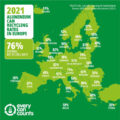 According to research, the recycling rate of beverage cans in the European Union has increased to 76.1%.
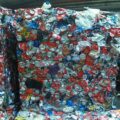 In Europe, around 570,000 tons of aluminum beverage cans are recycled, equivalent to a recycling rate of 76%.
 Aluminum can recycling to reach 76% milestone by 2021
 ALUMINUM BEVERAGE CAN RECYCLING REMAINS AT A HIGH 76%.



0 Comments