The definition of “recyclable” in the U.S. is becoming more complex as California’s SB 343 law impacts labeling programs nationwide, creating uncertainty among companies and leading some to consider withdrawing certain packaging from the state.
The voluntary How2Recycle program has adjusted the classification of several materials from “widely recyclable” to “check locally” to meet the collection and processing thresholds required for 60% of the Californian population. This fall, How2Recycle began implementing the new Pro labels, reflecting these changes.
According to Karen Hagerman, director of How2Recycle, the current criteria go beyond technical recyclability and also focus on legal definitions. The SB 343 law is complemented by the guidelines of SB 54, the extended producer responsibility legislation managed by CalRecycle, although the agency is not the final authority of 343. Enforcement depends largely on the courts, with the possibility of legal action from both the Attorney General’s office and citizens or groups.
For experts, the key is to maintain clear communication despite the temporary “chaos” generated by the new definitions. Paul Nowak, executive director of GreenBlue, advises brands to always use the most conservative standard for their labels, so that they are easily defensible against questioning.
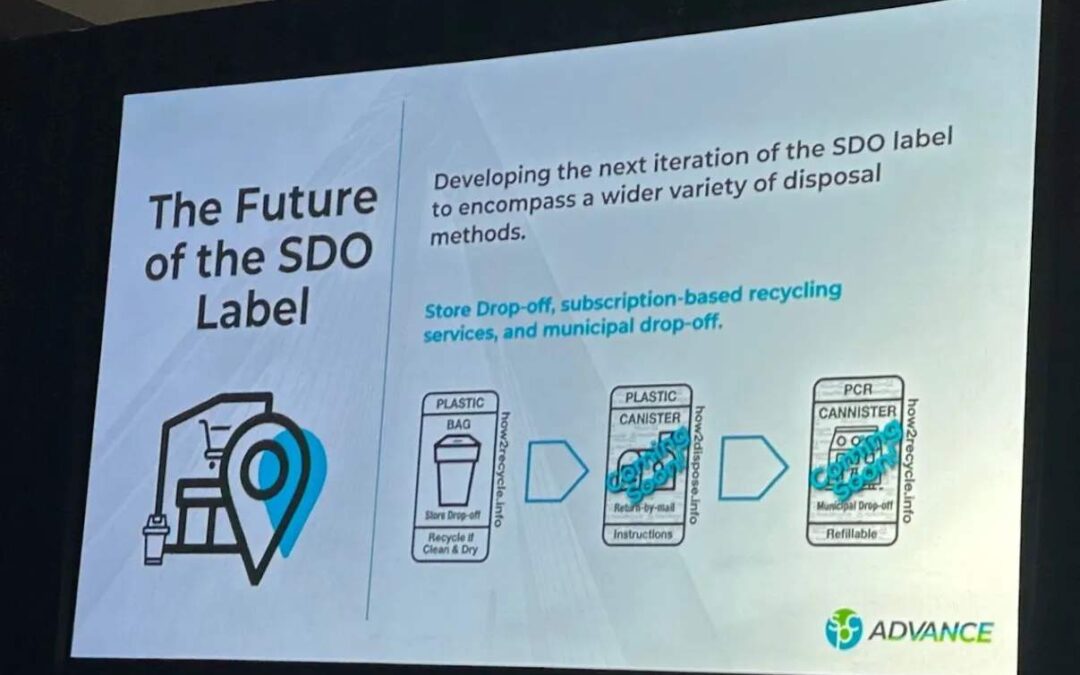
The Design Collaborative of the Sustainable Packaging Coalition is evaluating new label designs for collection points in stores, especially for flexible packaging and films, one of the most litigious sectors